
Cold Womb in Traditional Chinese Medicine: Fertility Insights for Women in Northern Virginia.
If you’ve spent any time following acupuncturists or Traditional Chinese Medicine (TCM) practitioners who focus on fertility and women’s health, you’ve probably heard phrases like cold womb, cold uterus, or cold in the uterus.
But what does that actually mean? How would you know if it applies to you? And are there things you can do at home to support your body if cold is part of the picture?
Let’s break it down.
What Does “Cold” Mean in Traditional Chinese Medicine?
Traditional Chinese Medicine is an ancient system rooted in close observation of nature. It developed during a time when people lived agrarian lives, paid attention to seasonal rhythms, and didn’t have modern conveniences like central heating or hot showers year-round.
Because of this, the language we use—terms like cold, heat, dampness, or stagnation—comes directly from observing how nature behaves.
So when we say “cold,” we’re not talking about a diagnosis or a temperature reading. We’re describing how something functions.
Think about what cold does in nature:
Cold slows things down
Cold causes contraction
Cold reduces circulation
Cold can cause water to freeze or become sluggish
“In Traditional Chinese Medicine, cold in the body tends to slow movement and restrict flow. When this happens in the uterus, it can affect blood flow, muscle relaxation, hormonal signaling, and overall reproductive health.”
Why Cold Matters in the Uterus
The uterus relies on healthy circulation of blood and fluids. When there is cold present, circulation can become sluggish or blocked—a state we call stasis.
Blood stasis in the uterus can show up in very tangible ways, especially during menstruation. The menstrual cycle actually gives us one of the clearest windows into uterine health.
Signs of a Cold Womb You Can Notice at Home
One of the easiest ways to assess for cold patterns is by observing your period.
Some common signs include:
1. Painful menstrual cramps
Especially sharp, intense pain that feels better with heat. Pain in Chinese medicine often signals that the body is working hard to move something that’s stuck—similar to trying to break ice in winter rather than scooping flowing water in summer.
Cold also causes muscles to contract. Think of shivering when you’re cold. In the uterus, this can translate to stronger, more painful cramping.
2. Blood clots during menstruation
If you regularly see clots—especially quarter-sized or larger—this can be a sign of slowed or obstructed flow. A simple visual is a cold river in winter, with chunks of ice floating through it.
It’s important to note that clots can also come from heat patterns, which is why working with a practitioner matters. But clots plus pain that improves with heat often point toward cold.
3. Lower abdominal temperature
A simple at-home check: use the back of your hand to gently feel your abdomen. Compare the area below your navel to the area above it. If the lower abdomen consistently feels cooler, that can be another clue.
At our Falls church clinic, we often see women from across Northern Virginia experiencing these patterns without realizing they may be related to "cold" from a TCM perspective.
How Do You Know for Sure?
TCM is all about pattern differentiation. Cold is not the only cause of cramps or clots, and this is where an acupuncturist can help sort out what’s really happening.
One helpful clue: if applying heat to your lower abdomen reduces your cramps, cold is very likely involved.
Cold is also a stubborn pattern—it often develops over time—so professional support can make a big difference. At Alleva Acupuncture, we frequently help women across Northern Virginia identify and treat cold womb patterns through personalized acupuncture and herbal therapy.
Supporting a Cold Womb at Home: Three Simple Steps
While acupuncture and herbal medicine are powerful tools, there are also supportive things you can do at home.
1. Apply heat to the lower abdomen
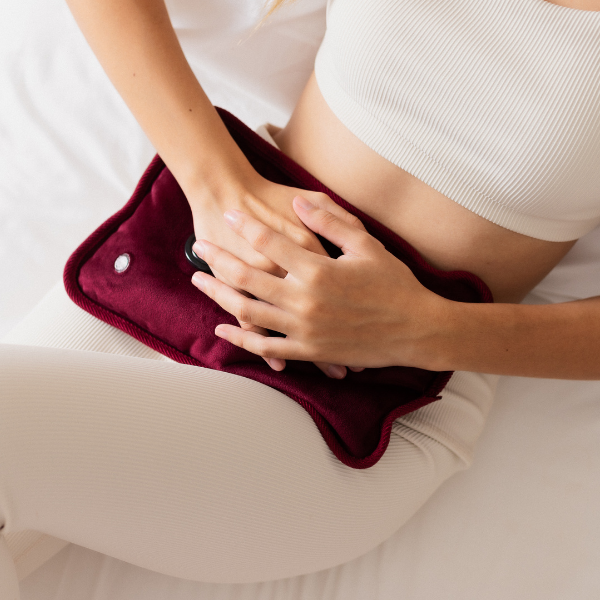
Using a heating pad or hot water bottle on your lower belly for about 20 minutes daily can be very helpful. Many people find doing this in the evening before bed especially soothing.
2. Keep your feet warm
This may sound unrelated, but it’s incredibly important. In TCM, there are pathways that connect the pelvis to the inner legs and the bottoms of the feet.
Many cultures emphasize this same wisdom: warm feet support reproductive health.
Wear socks or slippers, especially in winter
Use a warm foot bath (water up to the ankles or lower calves)
Heat your feet at night with a heating pad or hot water bottle if they tend to run cold
Keeping the feet warm helps encourage circulation throughout the entire reproductive system.
3. Avoid foods and drinks that introduce cold
In modern Western culture, we often assume raw or cold foods are “healthier.” In TCM, raw foods are energetically cold and can weaken digestion and circulation—especially for those already prone to cold patterns.
Support warmth by:
Avoiding iced drinks such as iced water, iced coffee, smoothies made with frozen ingredients
Choosing warm beverages, such as tea, warm water or room temperature water
Eating warm, cooked foods like soups, stews, and roasted vegetables and meats
Historically, people ate what was available in each season. Raw foods were for summer; warm, cooked foods were for winter. Aligning with this rhythm can be deeply supportive.
Warm spices, such as cinnamon, ginger, cloves, nutmeg, cardamom, and black pepper, may help, but they should be used thoughtfully, especially if digestion is sensitive.
A Gentle Reminder
If you suspect a cold womb pattern, you’re not broken—and you’re not alone. This is a very common pattern, especially in modern life, where stress, overwork, cold exposure, and restrictive diets are common.
Chinese medicine focuses on creating the right internal environment. With warmth, circulation, and support, the body often knows exactly how to heal.
Ready to Get Support?
If you're in Arlington, Falls Church, or Northern Virginia and wonder if a cold womb could be affecting your cycle or fertility, our team at Alleva Acupuncture is here to help.
Schedule a consultation today to begin your healing journey.